
English| EUR
Suggested for you
More currencies
Choose a language
Whale watching off the Cork coast is a seasonal activity tied to migration patterns and Atlantic weather windows. This guide covers the months when cetaceans pass through Irish waters, the conditions that shape sightings, and how to plan around the variables that matter most.
Quick answer
Cork whale watching season runs from early June through late September, with the highest probability of sightings in July and August when fin whales, minke whales, and humpbacks migrate through the continental shelf waters off West Cork. Weather remains the limiting factor: tours operate in calm conditions, and cancellations are common outside the summer stability window.
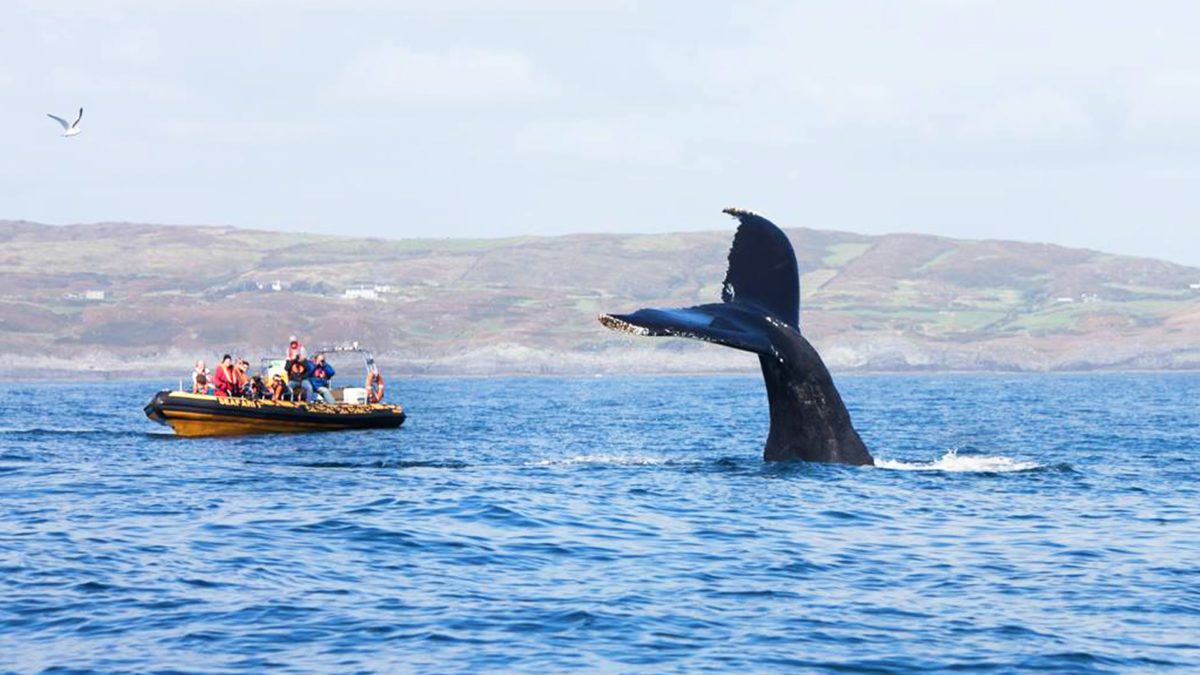
The continental shelf edge west of Baltimore Harbour attracts baleen whales during a narrow summer feeding window. Fin whales, the second-largest cetacean species, arrive in June and remain through early September, drawn by krill and herring shoals that concentrate along the thermocline. Minke whales overlap with the fin whale season, often sighted closer to shore, while humpback whales pass through intermittently, their numbers increasing in recent years as North Atlantic populations recover. Cork whale watching season aligns with the calmest Atlantic weather Ireland experiences. June through August offer the most stable conditions, with lighter winds, longer daylight, and sea states that allow boats to reach offshore feeding grounds. September extends the window but introduces more frequent swells and shorter days. Outside this period, winter storms and reduced cetacean activity make departures rare. Tours operate from Baltimore Harbour, departing morning and afternoon when conditions permit, with no guarantee of sightings on any given trip. Peak season in July and August brings the best statistical odds, but whales remain wild and mobile. A July departure benefits from maximum daylight and the highest concentration of feeding activity. Early June and late September offer quieter boats and lower demand, though weather reliability drops at both ends. Operators monitor real-time reports from other vessels and adjust routes accordingly, sometimes heading southwest toward the Fastnet Rock or tracking sonar readings shared across the fleet. Booking flexibility matters more than selecting a perfect date, as cancellations due to sea state are standard practice rather than exception.
“Fin whales, the second-largest cetacean species, arrive in June and remain through early September, drawn by krill and herring shoals that concentrate along the thermocline.”
The peak season for whale watching in West Cork spans from late summer through early winter, when migratory patterns bring diverse species to these coastal waters. August through November offers the highest probability of sightings for minke, fin, and humpback whales.
15°C to 18°C; variable conditions
Minke whales are frequently active alongside common dolphins and harbor porpoises. Water temperatures remain at their annual peak during this period.
10°C to 14°C; often windy
Fin and humpback whales typically arrive to feed on herring and sprat. Sea conditions require thicker clothing as temperatures drop.
7°C to 10°C; unstable
Sightings focus on fin whales in offshore waters. Trips are highly dependent on favorable sea states and weather windows.
Verdict: For the highest probability of sightings across multiple species, plan your visit between September and November.
Tours depart from Baltimore Harbour daily throughout the season. The office maintains consistent hours for all inquiries and scheduled operations.
Whale watching departures are located at Baltimore Harbour, Co. Cork. The most straightforward approach is by car via the R595 road, which connects directly to the village of Baltimore.
R595 road to Baltimore
Bus Éireann 237 from Cork City to Skibbereen, then local link to Baltimore
Direct hire from Cork City or Skibbereen
Tours typically depart morning and afternoon; you should arrive 20 minutes before your scheduled departure. The best arrival window is 09:30–14:15.
Prepare for Atlantic conditions and confirm your arrangements before departure.
Everything you need to know about cork whale watching season
The cork whale watching season typically spans various months throughout the year, with peak activity often observed in late summer and autumn. Marine life such as minke whales, common dolphins, and harbour porpoises are frequently encountered in the waters off the coast of West Cork. These oceanic excursions are conducted by experienced skippers who navigate the Atlantic to locate local wildlife. The standard entrance fee for a scheduled boat tour is 50 EUR per person. While prices are fixed, you should check the official site for availability regarding your preferred travel dates. It is advisable to secure your spot early for the busy cork whale watching season, as boat capacity is strictly limited to ensure a quality experience. Please ensure you arrive 20 minutes before your scheduled departure time, with the best arrival window being 09:30–14:15. These tours are generally suitable for families, though it is important to consider the duration of time spent at sea on the vessel. In the event of unsuitable weather conditions, tours may be rescheduled or cancelled for safety reasons, as captains prioritize passenger wellbeing during the entire West Cork marine wildlife season.
Whale Watching Tours in Cork
Read more Tickets & toursWhale Watching from Union Hall
Read more Tickets & toursWhale Watching from Reen Pier
Read more Tickets & toursWhale Watching in Baltimore Cork
Read more GuideWhale Watching Cork Prices
Read more GuideCork Whale Watching Reviews
Read more GuideBest Time for Whale Watching in Cork
Read more